
Graves Light—Access
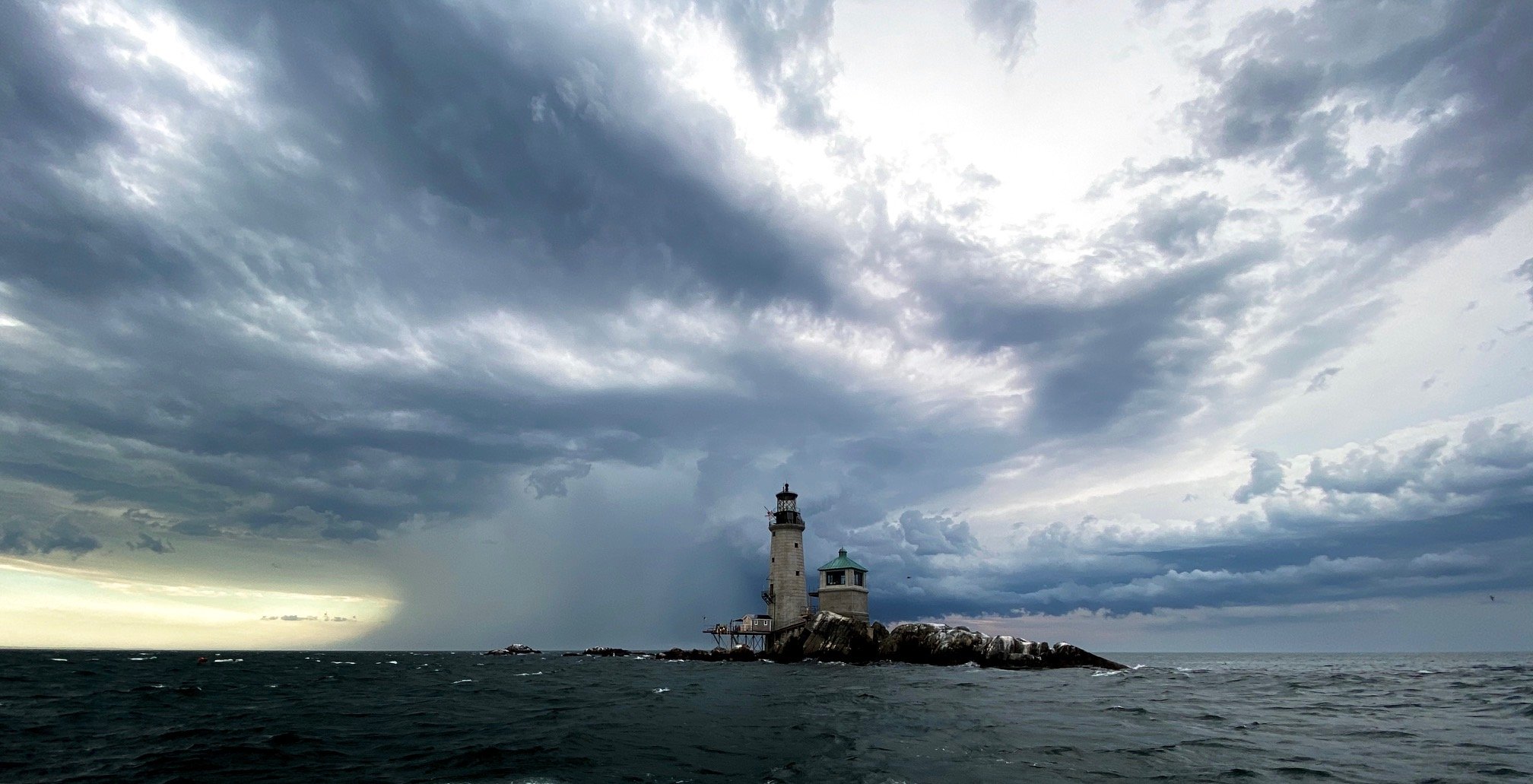
Approaching Graves from the West.
Nine miles offshore, where Boston Harbor loosens its grip on the coastline and the water begins to behave like open ocean, a granite tower stands on a ledge that has ended more than a few passages prematurely. From shore its barely visible— a pale scratch on the horizon, easy to miss if you’re not looking. From the water it builds slowly, accumulating presence until it becomes the only fixed point left in view.
I first went out to Graves in the winter of 2019. I was finishing my last semester at RISD, dividing my time between school, shop work, and a general uncertainty about what came next. I was busy, but not yet oriented. A friend asked if I wanted to help on a restoration project offshore. There was no real description of the place—only a meeting time at the East Boston docks and the suggestion that I should dress warmly. I said yes without thinking much about it.
The passage is short by nautical standards, but long enough to feel a transition take place. The harbor doesn’t end so much as it thins out. The water shifts first, then the air, then the horizon. The shoreline flattens and recedes until the city compresses into a low, indistinct band behind you. Tools shift underfoot as the boat works. The land begins to feel provisional.
Graves shows itself in stages. First as a smudge against the sky, then as a darker interruption in the horizon line. As you close the distance, the geometry sharpens. What looked small from afar resolves into a massive pier of interlocking granite blocks thrust straight out of the Atlantic, topped by a tower whose proportions only make sense once you are looking up at it from below. The scale is immediate and corrective. It tells you, without ceremony, what kind of place this is.
Getting there is never a single act. You don’t arrive so much as you transfer. Dock to boat, boat to dinghy, dinghy to rock, rock to winch. Every movement is broken into smaller ones. Tools and materials move one at a time, passed hand to hand, timed to swell and tide. Even on calm days there is a sense that access is conditional. The place does not reorganize itself to accommodate you. You adapt, or you don’t land at all.
That winter, the main task was installing a timber-framed roof on the oil house. Dave had arranged for a heavy‑lift helicopter—one of the few machines capable of carrying that kind of weight—to fly it out and set it in place. The frame had been built in Maine, trucked south, lifted by crane onto a barge, and brought as close as the barge captain dared before the helicopter took the load and carried it the rest of the way. Guided by lasers, the pilots lowered it onto the stone within an inch of where it needed to land, then lifted away as quickly as they had arrived.
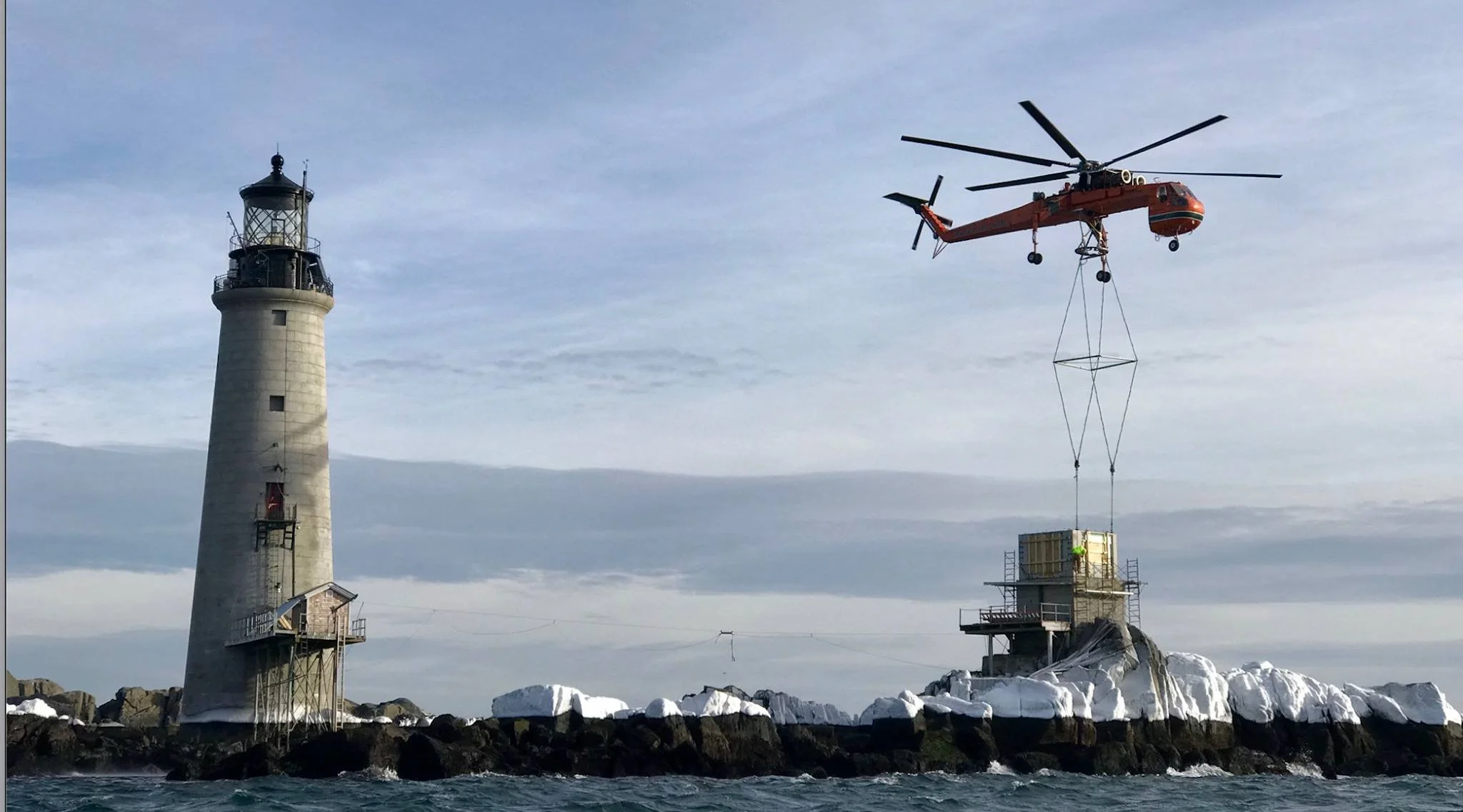
An Erickson Air-Crane setting prefabricated concrete walls for the new timber roof.
Once the helicopter disappeared, the tempo changed. Over the next two days we levered and come‑alonged the frame the rest of the way into position, inch by inch. Each adjustment was small. Each check mattered. It was patient work, shaped by mass and tolerance, done with the understanding that once the roof was fixed in place it would be left alone to weather on its own.
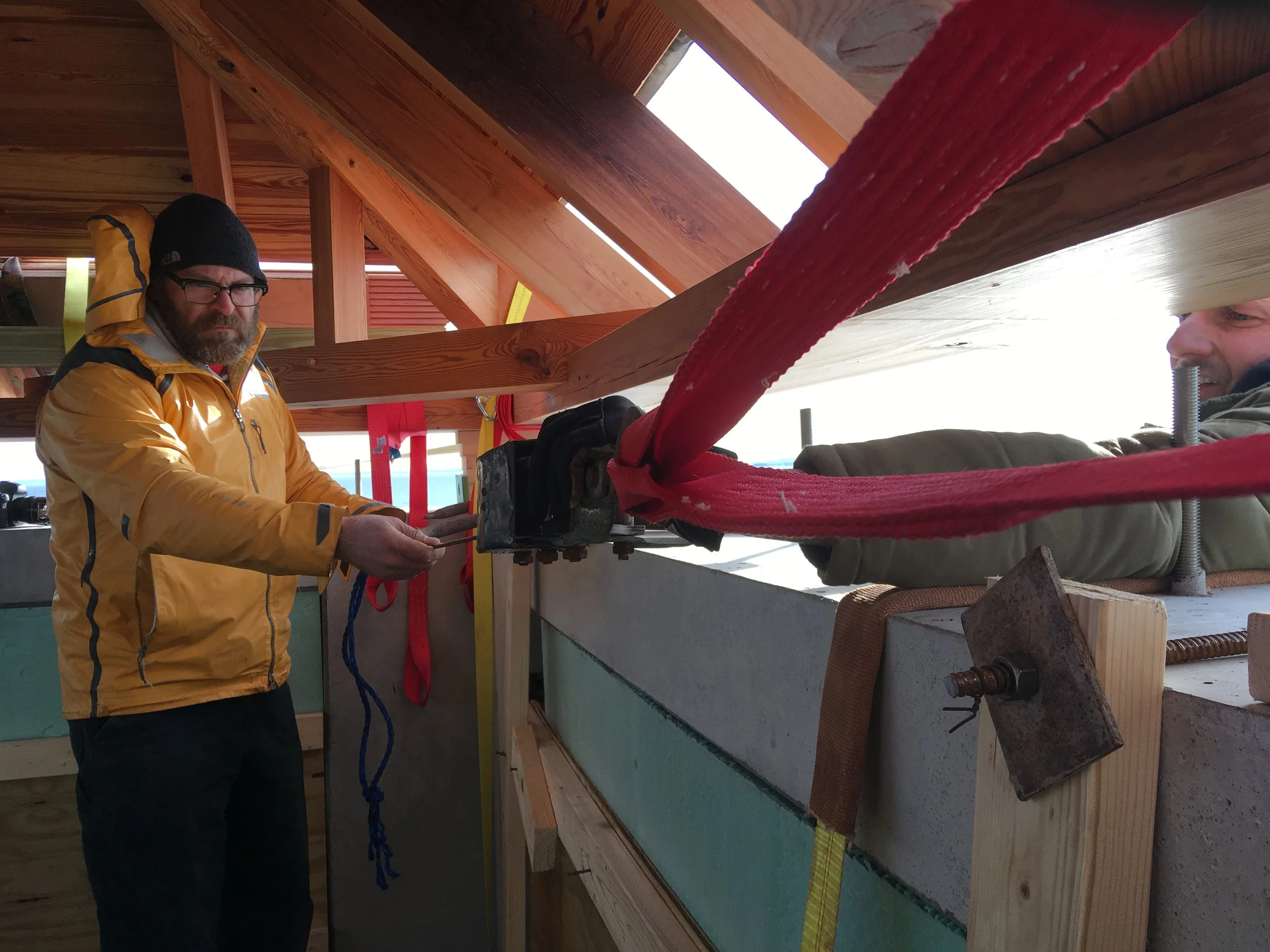
Dave (left) and Raivo (right), inching the frame into position with a come-along.
I spent six nights out there that winter. When the workday ended, we gathered around a wood‑burning stove inside the tower, drank rum, smoked cigars, played cards, and recounted the day’s work until fatigue took over. The wind never quit. You heard it through the walls, through the floor, through the constant working of water against stone below. At night the light continued its cycle, sweeping the water whether anyone was watching or not. The building kept doing what it was built to do.
At the time, none of this felt like an introduction. It was simply where the work was. Only later did it become clear that Graves has a way of making its terms known early, long before you decide whether you want to keep coming back.