
On Making Things on a Leaking Ship
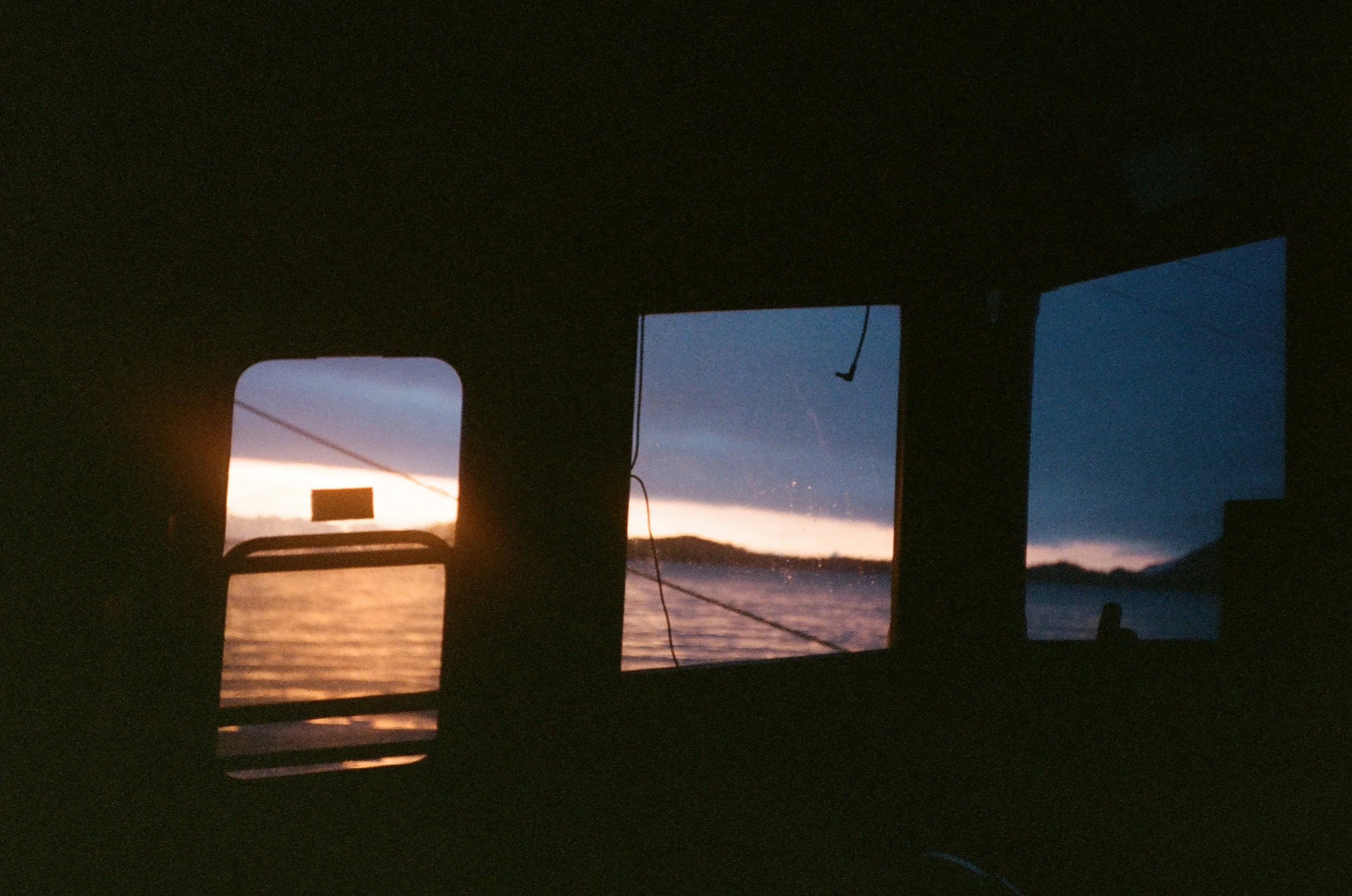
My father wrote about ecopsychology in the early 1990s, when environmental collapse was already visible but still abstract enough to ignore. His core argument was simple and unsettling: psychology, if confined to the individual mind, risked becoming irrelevant in a world whose basic life‑support systems were failing. Healing a person while the conditions that sustain life continue to erode is an ethical mismatch, like a therapist and client working earnestly in the hull of a sinking ship.
I didn’t grow up thinking in those terms. I didn’t inherit ecopsychology as a framework or a discipline. What I absorbed instead was something less formal: a sensitivity to context, limits, and interdependence. An understanding that a person does not exist in isolation, and that health and meaning extend beyond the self into systems that are easy to ignore until they break.
I make furniture for a living. I work with wood, tools, joinery, and time. On the surface, this has little to do with psychology, let alone environmental thought. But the longer I do this work, the harder it becomes to separate making from how I understand the world.
Wood is not neutral. It carries a record of climate, soil, stress, and growth. It moves. It cracks. It resists simplification. Every piece begins with constraints. Grain direction, moisture content, available material, and the limits of my own hands all shape what’s possible. Every good outcome depends on responding to those limits rather than denying them. You can push a board only so far. Eventually, the material pushes back.
This is not a metaphor applied after the fact. It is the daily condition of the work. Craft teaches you to notice limits, to work within them, and to accept the consequences of ignoring them. That way of working sits uneasily in a culture organized around endless growth, frictionless systems, and the belief that consequences can always be deferred.
My father worried about alienation—from nature, from community, from responsibility. He understood it as a psychological problem as much as an ecological one. I see the same pattern now, but through different channels. Design culture often treats objects as images before it treats them as things that must work. Tech culture treats systems as infinitely scalable until they fail. Even environmental discourse can drift toward abstraction, moral certainty, or paralysis.
Against all of that, making something that has to answer for itself feels like an act of refusal.
A chair has to hold weight. A table has to live in a room, within reach of bodies, through seasons of use. There is no plausible deniability. If it fails, it fails plainly, in someone’s home. That kind of exposure shapes how you think, not just about objects, but about responsibility more generally.
Ecopsychology, as my father described it, asked us to widen the boundaries of the self, to see ourselves as participants in a larger community of life. I don’t use that language day to day, but I recognize the impulse. For me, that expanded sense of self shows up in habit: how materials are chosen, what gets repaired, what is designed to endure, and what is expected to wear.
None of this solves the larger problems. A well‑made table won’t stop climate change. A handmade chair won’t reform healthcare or undo extraction. But that was never the promise. The claim was narrower than that: the way a problem is framed shapes what feels possible in response, and worlds are built through repeated choices and the conditions we accept as normal.
We are still on the leaking ship. The water is higher now, harder to deny, and unevenly felt. The temptation is either to retreat into private consolation or to reach for solutions so abstract they leave daily life untouched. Craft keeps the work closer to the ground, another way of staying with the problem at a scale where actions still have consequences.
To make something well is to accept interdependence. To accept that work draws from land, labor, history, and care, and returns something into the world, whether it is useful or not. That posture doesn’t save us. But it may keep us oriented.
My father ended his essay by calling ecopsychology an idea in progress, worth pursuing whether institutions supported it or not. I recognize that position. Making is also an idea in progress. So is trying to live responsibly inside damaged systems. Neither offers certainty. Both require attention, humility, and a willingness to work without guarantees.
I don’t think the point is to stop the ship from sinking by force of will. I think the question is how we behave while we’re on it—what we make, how we care, and whether we acknowledge the water rising around our ankles.